An interview between artist and writer Felicity Meadow and the FGC Editor-in-Chief Abigail Cain.
Felicity Meadow is a visual artist, musician, and writer based in Halifax, Nova Scotia, Canada. She graduated from NSCAD University with a Bachelor of Fine Art, receiving awards such as the Prof. B David Creative Innovators of Tomorrow scholarship, as well as a national nomination for the 1st BMO Art Award for her photography work. In 2021, she completed her first photography book, The Patchwork Album, telling the untold story of a rural Nova Scotian family. In 2024, she independently released her first novel, Something Happened Here, a coming of age tale on girlhood and its hauntings, combining poetry, prose, and illustration.
https://felicitymeadow.squarespace.com/
AC: What is your creative process like? Do you feel the visual comes first or the words?
FM: I sketched a diagram of my creative process recently- a cycle with four major points: 1) Inspiration, 2) Communication to Self, 3) Communication to Viewer, 4) Art. I was trying to figure out how art works in my brain. I’ve discovered over time that everything I do is some kind of drawing. I approach everything as an initial sketch, or impression, and render it out as I see necessary in order for it to be communicated to the viewer. It starts with inspiration, usually ignited by music, an emotion, a story, an injustice, beauty of some kind (from life: pain, love, chaos, harmony). Inspiration is invigorating, and it can derail the creative process fast for me if I get too swept away or excited by it, so it needs to be organized and described through words. Once I understand what I am feeling, how I see it, I can decide how it can be best portrayed if I want to communicate the same feeling of inspiration I had to someone else, or at least something close. For me, that’s how I make art. It can be a photo series, a song, an illustration, a poem, a book.
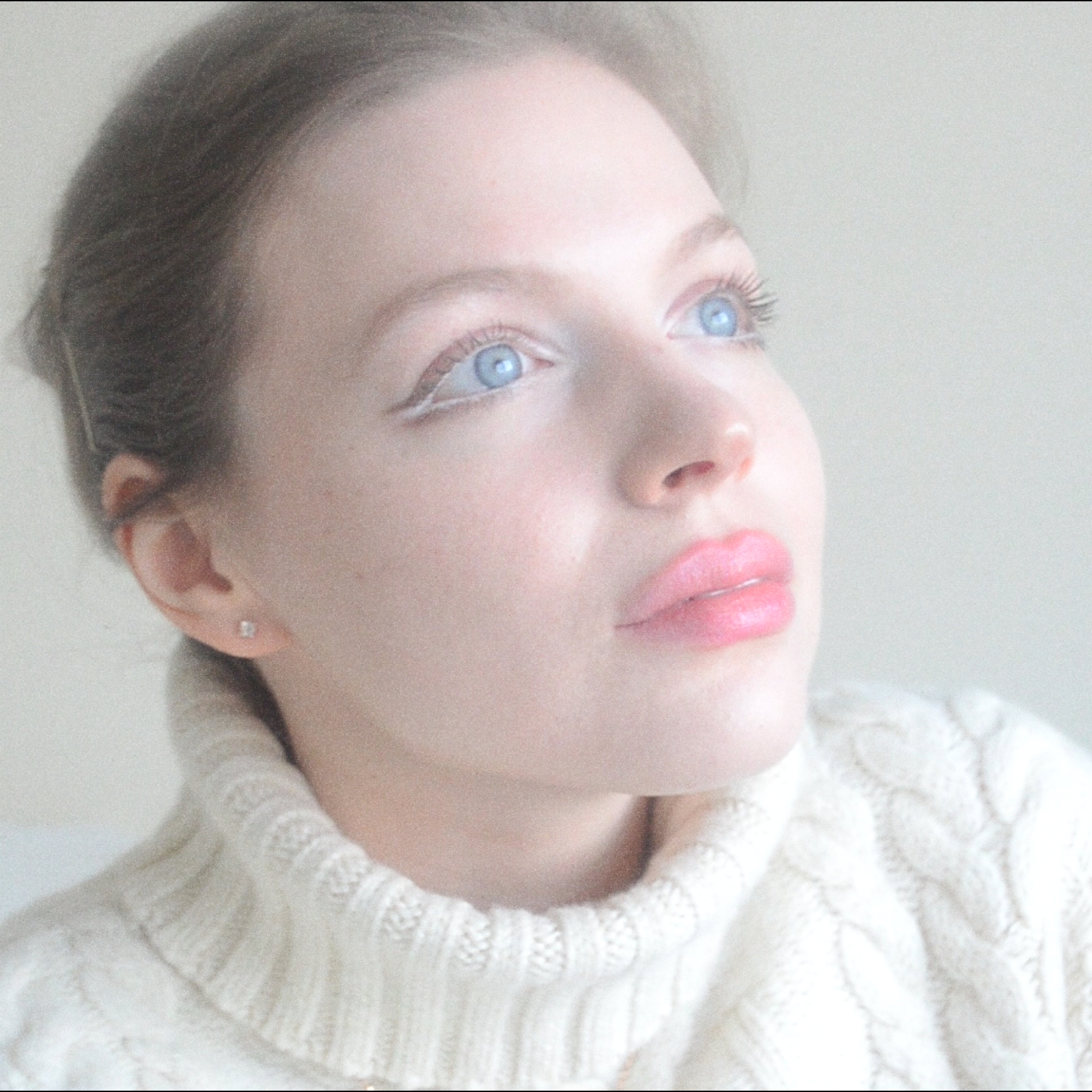
AC: Who is Sally Fawn to you? Where do you find character inspiration?
FM: If Sally and I were in the same room, it would be like seeing my younger self- or from her point of view: finally meeting the guardian angel she imagined watching over her in times she felt most alone. Much of my inspiration for Sally in particular is from my child and teenage self, the stories that filled my mind then and the issues that surrounded me growing up in derelict houses along isolated highways, feeling as alone as they were left. I am fascinated by the stories within an individual’s life, especially those who are overlooked and forgotten, or left abruptly as fleeting connections. Silenced voices. The old woman who lived alone in a shack who brought us cucumbers, the forest fire that lapped at the houses one summer and a girl ran in, devoured. Animals, the Earth, those who can’t ‘speak’, I want to listen to them and decode the ways in which they do communicate, because there’s always something.
AC: Location is very prominent in your work. How do you feel the themes of silence, disappearance, and stillness are manifested in Rural Nova Scotia?
FM: Rural Nova Scotia is where I was born, and I grew up moving from one derelict house to the next, collecting fleeting stories of young girls who I knew momentarily until moving again. Regarding the rural environment, culture and community, many people have the same act- voluntary or not. Missing youth posters taped onto empty furniture stores eventually are bleached blank. Poverty and mental ailments are passed down generationally, from drunk parents who throw around outdoor pets, to drunk kids with Elmo tongue rings and name-tag tattoos. Houses seem to have their own tired faces, glowering from the violence against women within. Inside, the women stoke the hearth, and the unnamed perpetrator built it himself.
I think, from the history of Canada itself, there is darkness, pain, and mistreatment dwelling within the land, brought from the colonialist settlers. They brought illness and violence to use against the Mi'kmaq and Indigenous people, to take from and silence them. I grew up living on this stolen land. I don't think thieves treat their treasures well.
AC: You’ve described SHH as a modern take on Lolita. How do you feel the Lolita complex has changed overtime, if at all?
FM: My first experience with anything ‘Lolita’, was a fan-made music video of Mac Demarco’s ‘A Heart Like Her’s’ on Youtube, with visuals from the 1997 film ‘Lolita’. I was swept away in its impressionist-dream cinematography, set design, fashion, and being around the same age as Dominique Swaine’s character, Dolores, at the time. I related deeply to her excitement, innocence and the springtime environment that both surrounded and mirrored her (along with the shady adults taking her away from it all). I too became enamoured/haunted by Humbert, and even more so torn by Ennio Morricone’s “Love in the Morning” piece from the soundtrack. Of course, I borrowed the book from a girl in my highschool long after. Ironically, I was reading it outside on my porch when my old-man neighbor crept over through the grass to watch. No one believed me.
I believe in the power of reclaiming male depictions of women and girls. Of letting viewers know that our ‘Lolita’ moments/experiences were done to us, and experienced by us. By the girls, the children. Haunting the women and feminine. It is our, and my, story to tell. With social media, girls are posting art just about everywhere, and expressing their pain, trauma, experiences and desires. From Tumblr girls, 'notes-app poetry', and the countless ‘-core’ suffixes wrapped in bows and fawn pelts, the stories are in our hands now.
AC: Alice in Chains is brought up in the artwork and prose of SHH as well as in your description of The Patchwork Album. How do you think music impacts your art?
FM: I have a very deep personal relationship with music, especially 90s alternative and grunge music. I was surrounded by it growing up, and as a stoic teenager it was one of my only emotional outputs. Before I had access to the internet, I had a hand-me-down first gen ipod with my parent’s old music downloaded on it. I lived in the woods and I would spend hours just looking outside at the trees and listening to old grunge music.
Art has many mediums, and the stories communicated through 90s grunge music (Alice in Chains) told parts of Sally’s story. Even while I was writing, I would play certain songs that evoked the emotions of Sally, Desiree, or Leon. Love Hate Love, Frogs, for example. Further, the grunge scene itself was a tragedy that left behind legendary music and stories. It’s no secret that many of the grunge artists struggled with mental health issues, came from poverty and difficult childhoods, and met their fate through drug overdose and self-affliction. Many of their songs were not only raw, emotional depictions of these experiences, but also became self-fulfilling prophecies. They wrote music and sang about growing up in dirt, drug abuse, loneliness and isolation, with blues, metal, and country influence. Sounds pretty familiar to me. And Hole, that’s the other side of grunge included in SHH- Pretty on the Inside, I Think That I Would Die- there’s a lot to talk about feminine rage and girlhood there. Not to mention the feminist lyricism of Tori Amos, and her musical depictions of girlhood's violent descent into womanhood.
AC: What’s next for you?
I believe there is more to Sally's story that has yet to be heard, and so I have further plans for Something Happened Here. Some surprises will be in my next edition of the book, including new formatting (hardcover), including more illustrations and story, as well as a more accessible ebook. Beyond SHH, I have many more stories to tell, some through photography, some through illustration and the written word, and some through song. Here's a hint: there is another world, of feminine utopia, it's been washing away the dirt of this one. I'd like to invite you, if you're reading.