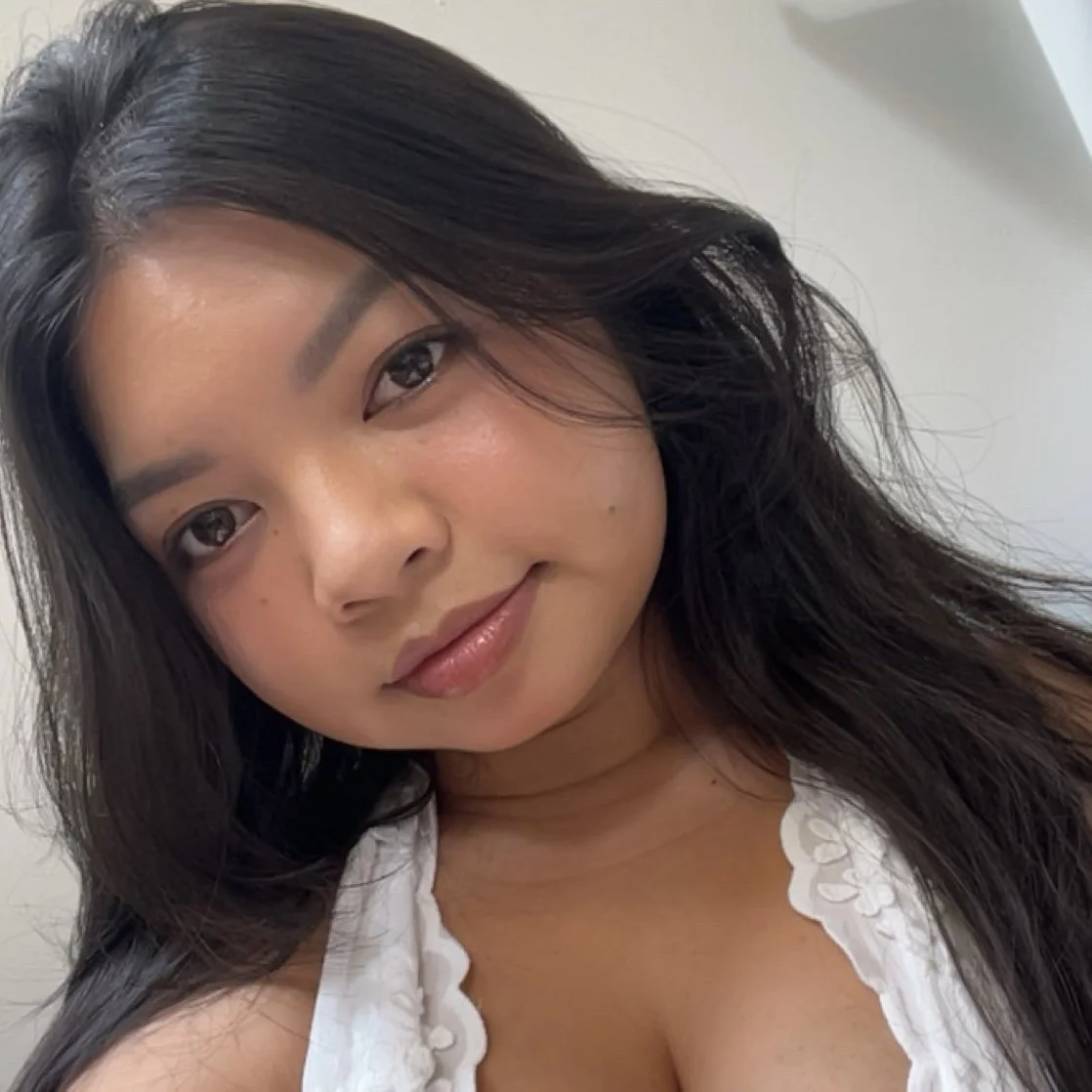
Trin Encarnacion is the author of Pusod, the selected editorial favorite from our debut print collection, Bruised Knees and Gardenias. Find Trin’s work here.
Trin Encarnacion (she/her) is a Filipina American daughter of immigrants who grew up in San Diego, California. She now resides in Bellingham, Washington where she pursues an MFA in creative writing at WWU, teaches first-year writing, and writes stories about the Gen Z Filipina American coming of age. Her writing has appeared in Pinch, Periphery, Sardine Can Collective, and elsewhere.
Tell us a little bit about Pusod and your process of writing.
“Pusod” is a poem about the connection and disconnection between an immigrant mother from the Philippines and her daughter. While the pair were once physically joined together, the daughter now feels distant from her mother and wishes to crawl inside her belly button to feel that former sense of closeness. While writing this poem, I wanted to highlight the daughter’s sense of yearning to not only be with, but understand her mother (and have her mother understand her in return). This yearning speaks to the differences between the Philippine-born mother and American-born daughter. In confessing her hopes of someday closing the gap between them and overcoming those differences, the daughter directly addresses her mom in this poem. The lines are also broken up so that they come together to resemble a belly button.
Who are some of your biggest inspirations?
I gain a lot of inspiration from Filipina American writers, such as Michelle Peñaloza and M. Evelina Galang. I especially feel inspired by their work that examines the complex relationships between Filipinos of different generations. However, I get the most inspiration for my writing from family members and loved ones, who are great storytellers themselves!
What’s next for you as a writer?
I’m currently at work on a book-length collection of linked hybrid pieces for my MFA thesis. The collection chronicles the coming of age of a second-generation Filipina American character who navigates and celebrates her fragmented identity. While the hybrid form is newer to me, I've enjoyed deconstructing traditional models of storytelling and turning toward experimental forms. It’s been a challenging and fulfilling writing process so far!